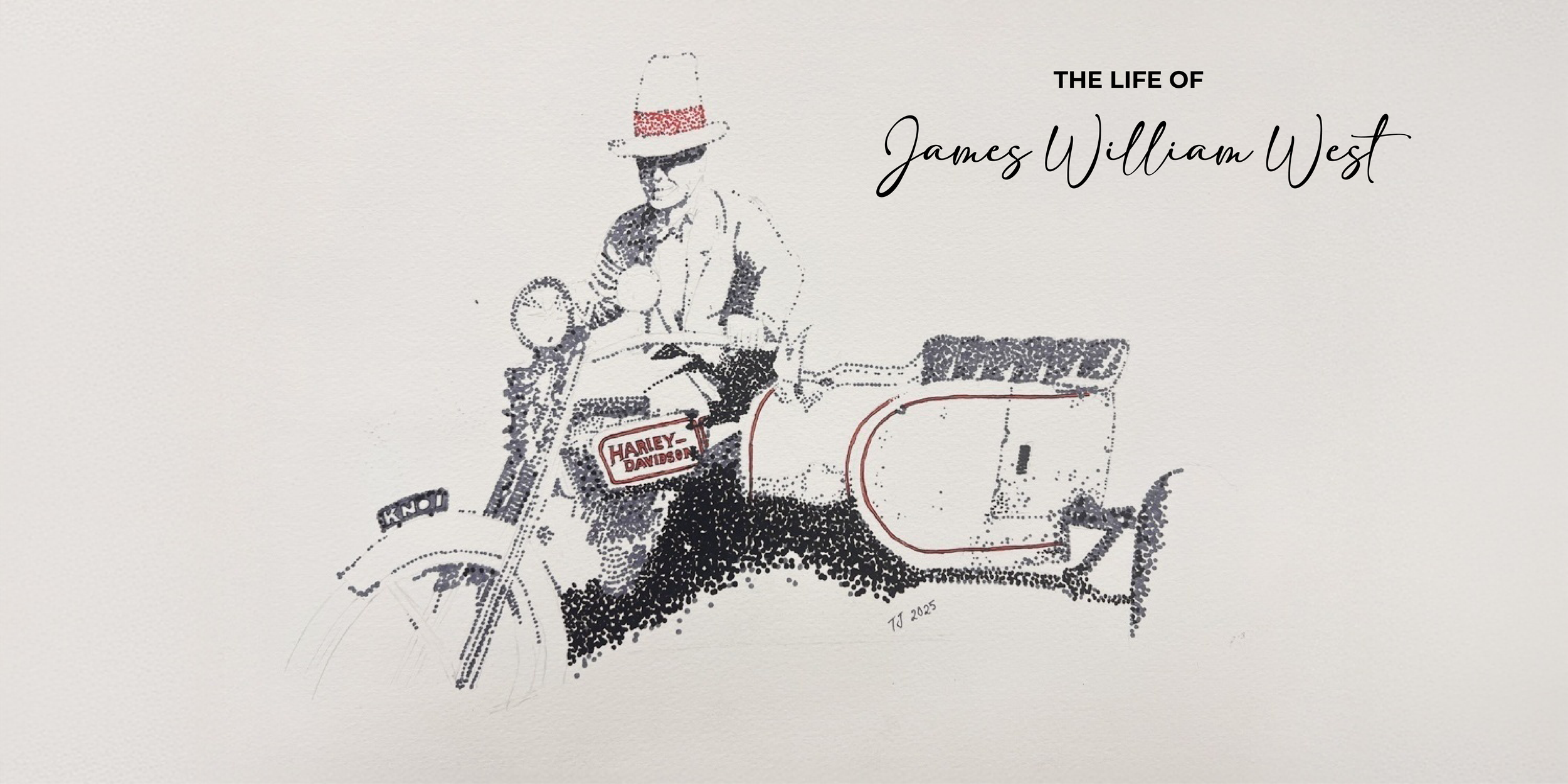
Author Terri (TJ) Strong nee West
PO Box 162 Albany
James William West, youngest son of Christopher West, and wife Martha (nee Bodkin), was born in Kyneton, Victoria, on 8th April 1889.
CHAPTER ONE:
The first chapter in this writing of JW’s life story consists of his childhood in Victoria.
CHAPTER TWO:
The next chapter continues with JW’s teenage journey. At 14 years of age, he headed to Western Australia. This chapter continues with his Dumbleyung pursuits.
CHAPTER THREE:
Following this chapter is record of JW’s services with the 10th Light Horse Regiment in WW1, lasting for two and a half years, and includes death of his cousin/best mate ‘Jim’ Bodkin.
CHAPTER FOUR:
JW’s return from WW1 is noted in the next chapter, including a grand welcoming in Dumbleyung, family visit to Victoria and New South Wales, and his decision to move to Kondinin.
CHAPTER FIVE:
The last chapter will give JW’s important presence in Kondinin’s early years, his marriage to Marjorie Stubbs and the continued local commitment he made in Kondinin for 34 years before he and Marjorie moved to Perth.
CHAPTER SIX:
The Perth chapter.
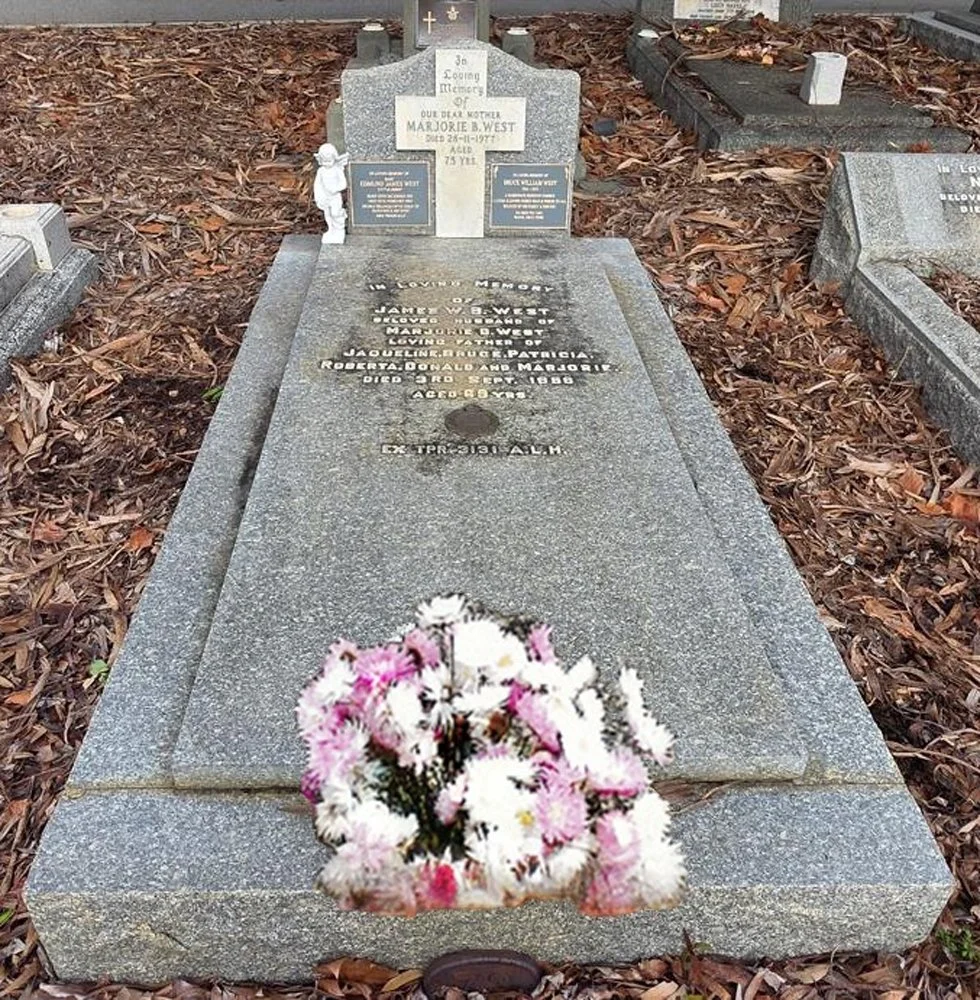
JW died on 3rd September 1958 at the age of 69 years.
Childhood in Victoria
JW’s father, Christopher, was born @ Rathkeeland in Northern Ireland in 1843, where he grew up and worked on the family farm until 21 years of age. This farm is still farmed by relations - Robin West’s family. Christopher then sailed, with his sister Anne Jane, on the “Annie Wilson”, to Melbourne Victoria in 1864. About twenty-five years later Christopher rejoiced the birthing of his sixth son James William (JW).
Christopher West and his first wife, Jane Bignill, had six children: Robert, Frederick, Mary Jane (m Hall), John Thomas ‘JT’, Priscilla, (m Cook), and Margaret (m Height). It is believed Jane died giving birth to twins.
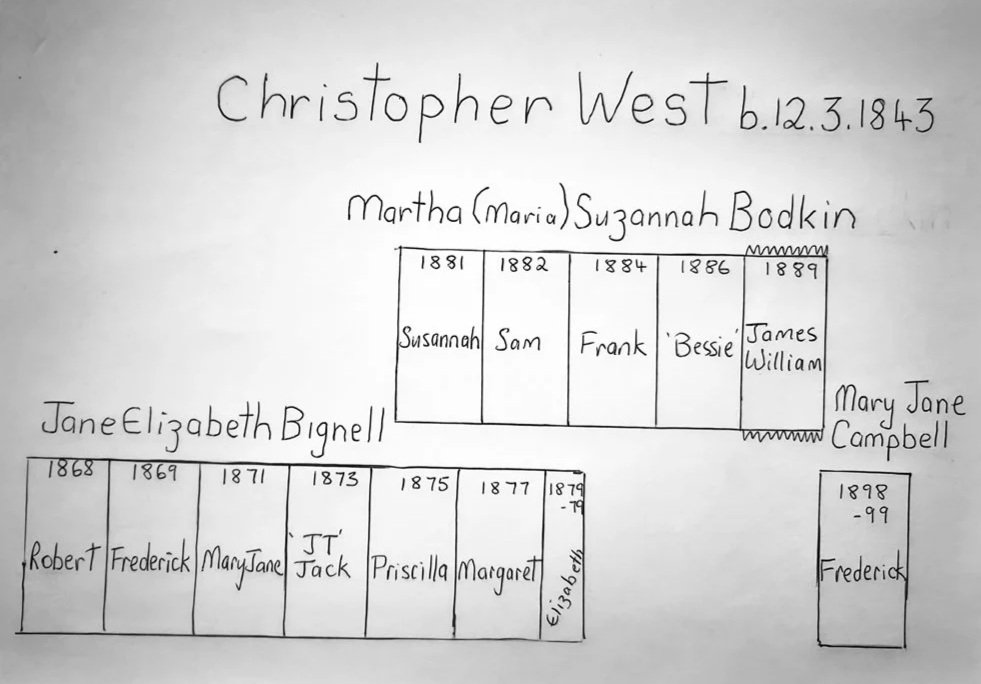
With his second wife, Martha, Christopher had five children, Susannah, ‘Sam, ‘Frank’, ‘Bessie’ and the youngest being James. Sadly, Martha died of breast cancer at 48 years of age when James was just seven years old. Young Jim then went to live with Martha’s brother, William Bodkin, and wife Maria (nee Lowry). The Bodkin’s had five children, Martha, Isabella, Henrietta, James and Frederick. and the whole family gladly welcomed JW into their warm home. JW had a very happy childhood with the Bodkins, being especially close to his cousin James, ‘Jim’.
Teenage Journey
JW grew up fast! In 1903 his father, Christopher gave him permission to travel by boat to visit his older brothers, JT, Sam, and Frank, and sisters Margaret and Bessie, in the Dumbleyung district of WA.
At just “14 years old his father gave him a suit, and ten Pounds ($20) and he left Victoria (Kyneton) and came to WA”. [11]
JW chose to stay in WA and did not revisit Victoria until after the War. In that same year of travel,1903, JW added Bodkin as an additional Christian name. He had great respect for the Bodkin family who raised him for about seven years in country Victoria.
In Dumbleyung at the young age of fourteen, JW soon developed a mother/son relationship with Alice West (Cissie), wife of brother Sam. JW worked with Sam and Cissie on their farm “Prospect” (now Balgun) and lived/worked with his half-brother JT(Jack) and Edith West on their farm “Harcourt”.
JW was an immensely popular, outgoing ‘man’ who could take a joke. He loved riding horses and later motorbikes. JW was also an industrious worker and a diligent saver. This enabled him to acquire 1000acre property west of Dumbleyung within a few years of making Western Australia home.
JW entered a business partnership with JT (Jack) in 1912, at about 23 yrs of age. During the first twelve months the business flourished with acquisition of agencies for Sunshine Machinery, Queensland Insurance, W.A. Producers Union, Sandovers, Glazers and Shirley (wagon builders) and soon also added the Dodge Car agency.
Trading as “West Brothers” they sold 30 Sunshine Harvesters alone during their first year of operation.
James West with the first consignment of Sunshine Harvesters in Dumbelyung. In 1912 he sold thirty, most with a comb width of six foot.
Along with being a quality horseman, JW was an outstanding rifle shot. His grandson Jim West recalls his father, Bruce, often stating as he pointed to a crow in flight
“Your grandpa could point his gun and shoot that crow every time.”
Wagin RifleClub. Empire Match won by J West Over 200, 500 & 800 Yds Handicap 8 Score 88 24’5’09
4 West bros, Harcoourt, Wagin.
Jack’s Farmhouse 1905...1910.
l.r Francis, C Samuel, John T, James (Bob stayed Vic)
Prominent citizens in the early years (Dumbelyung) JT (Jack) West, JW (Jim) West and JW (Jack) McIntyre
The West Family 1911
Frank, JT, Elizabeth ‘Bessie’, Sam, JW ‘Jim’ , Bob, Lavina, Jean, Edith, Alice ‘Sis’, Cliff, Stan, Marie, Mabel
A very exciting year it was when JW’s best mate, cousin Jim Lowry Bodkin (JL), came West with mates from Kyneton. In 1912 JL was 31 years of age and gained employment with a few local farmers. He also worked for the Road Board in Dumbleyung and joined the locals at football.
“After saving their money Jim (Bodkin) and his business partner Stan Meredith bought 1000 acres of land at Merilup, six miles south of Kukerin. They also purchased twenty-two horses from relatives in Wangaratta for delivery to Kukerin in 1914. Both men were excellent horseman, and Jim had spent four years as a member of the 8th Victorian Mounted Rifles (Light Horse)” [2]
Many of JL’s family (JW’s step family) had moved West in about 1906 “…after their father passed away [30.4.1906], the Bodkin family came West, to settle in Perth, Aunty Maria lived in W/Perth, Fred & wife Nita with 4 children in Mount Lawley. Aunt Hettie & Aunty Bella North Perth. Fred owned an Antique shop in Hay st, in Perth, which he & Hetti ran with great success. Bella was a v/good Tailor & dressmaker, she worked from home.” [8]
JW and JL played alongside each other with the East Dumbleyung Football Club. However, their world was to be changed forever when news started filtering home of the 10th Light Horse being evacuated from Gallipoli. Due to the extent of casualties there was a nationwide call for volunteers to replenish the ranks of our armed forces. James William Bodkin West, aged 27 yrs, and Jim Lowry Bodkin aged 32 yrs, enlisted. JW’s enlistment date was 6.6.1916.
Sylvester ‘Bob’ West, eldest son of JT ‘Jack’ and wife Edith joined the forces too.
Time in the Services
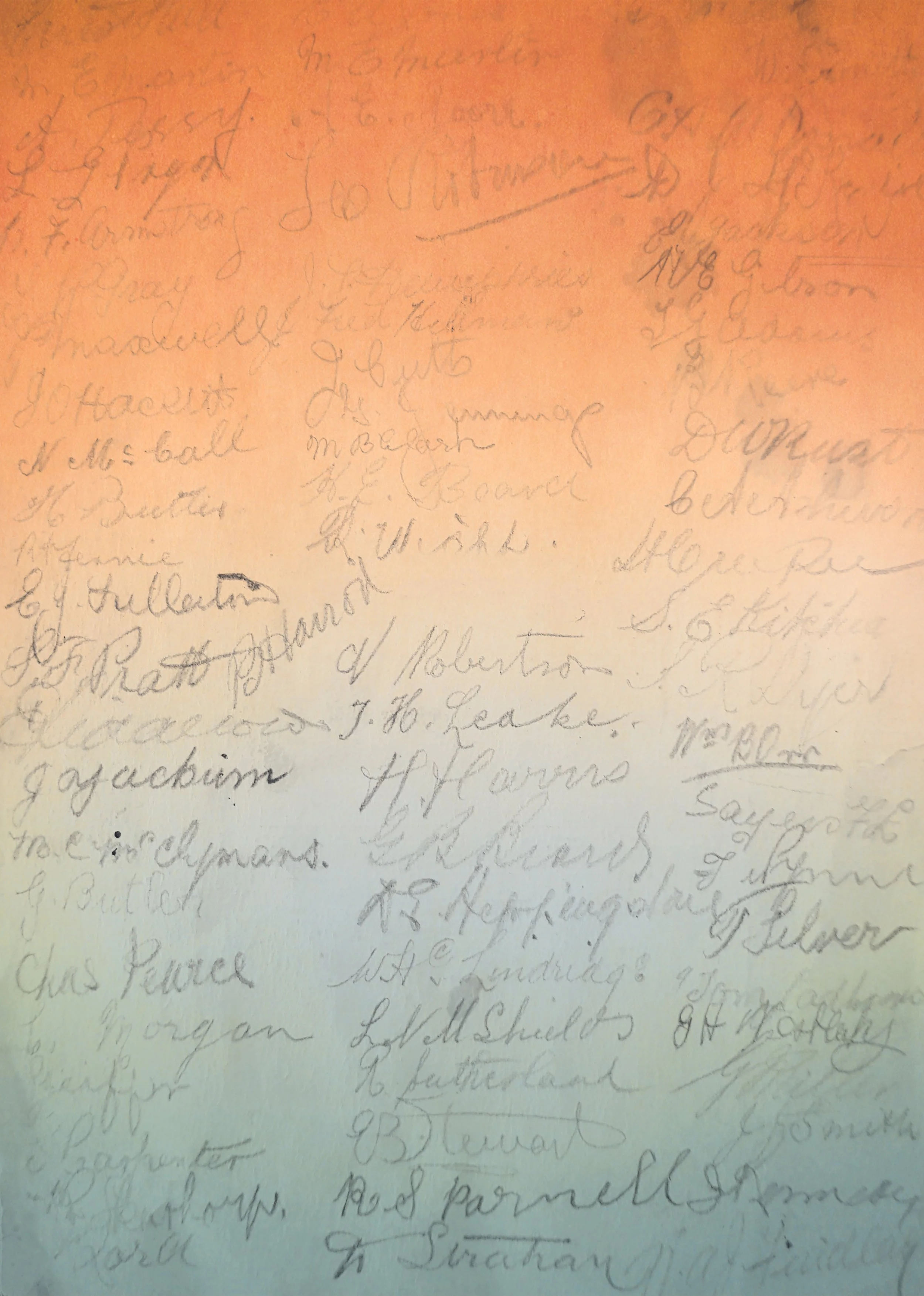
WW1.
JW enlisted in June and accepted to take his own horse from the wheat belt of WA to the Middle East to join the 10th Light Horse Battalion.
JW was issued with Service Number 3131 and declared his father Christopher West, living in Albert Park Melbourne, as his next of kin but stipulated that he was not the beneficiary of his Will. JW was assigned to 6th depot squadron, 24th reinforcements, 10th Light Horse Regiment (LHR). Cousin JL joined the 26th Reinforcements of the 9th LHR, “as a gunner”. [8]
After many months of training, Trooper James William Bodkin West left Claremont Training Camp [later to become Royal Show Grounds] to embark from Fremantle, 13th February 1917, aboard the ‘Clan MacCorquodale’ bound for Egypt. Record has not been found of date, or ship that JW’s horse left Australian shores, or of the horse’s name. JW disembarked 12th March at Suez and was marched into Moascar Camp Egypt. Two weeks later he was marched out to Details Camp 3rd LHTR and was later transferred to 10th LHR 22nd April. Two days later, as a 10th LHR Trooper he was taken on strength to Tel el Marokeb on 24th April 1917.
Dressed to leave Claremont Training Camp
JWB West
JWB West
JL Bodkin
During the next six months the 10th LHR took part in many reconnaissance patrols and working parties; digging trenches, wiring, training and reinforcing other regiments in preparation for the Third Battle of Gaza. JW’s acclimatization to desert conditions was not an easy one. He went sick to hospital with septic sores in late June 1917 and then returned to duty. He had to be sent sick again to 3rd Light Horse Field Ambulance until 18th July. It is possible that at this time JW was ill with Malaria. Although he took Quinine for it, he still had attacks for the rest of his life.
On 20th July JW’s regiment supported the 9th LHRs right flank at Wadi el Esani during an enemy shelling attack lasting seven hours (it’s not known whether JW and JL were able to meet up during this joint operation). Eventually the 10th LHR returned to Abasan with no casualties but with horses being in saddle for over thirty hours. August and September were spent on the move around Marakeb, Abasi, el Fukhari, Rafa and Shellal. The 10th LHR engaged in reconnaissance and tactical exercises resulting in increased enemy engagement, in readiness for their imminent planned attack on Beersheba. JW’s next record was him being marched to a Rest Camp at Port Said from 3rd to 13th October 1917. The remainder of October was spent with 10th LHR on the move toward their planned attack at Beersheba on 31st October 1917.
On that day, JW was part of a major action to capture ground around Tel-el-Saba five kilometres east of Beersheba. This phenomenally successful joint 9th and 10th LHR operation preceded the legendary 4th Light Horse Brigade’s cavalry charge to take place during mid-afternoon on the same day.
Tragically Jim Bodkin was wounded in action during this operation and died the following day, 1st November 1917.
JW wrote a letter of sympathy to his Aunt Maria immediately he had the opportunity. Maria of West Perth was listed as his next of kin, Jim’s cousin Sam, of “Prospect” Ballaying, in Dumbleyung, was listed as the executor of his Will.
JL’s sister Hettie, three years older, wrote to the Lowry family’s cousin Maggie in Ireland, with the sad news of her brother’s death. In this letter Hettie wrote of her cousin Jim West,
“I don’t know if I ever told you of him he was my Father’s nephew and his Mother died and we took him and he was just like a brother and very dear to us and he and my brother Jim were awfully alike to look at and often mistaken for each other.”
The Southern Argus dated 17 November 1917 expressed “Quite a gloom was cast over Kukerin and Merilup when word came through that Trooper James Bodkin had died of wounds. ‘Jim’ was known to practically everyone in the district, his genial face and jovial disposition always appeared to cast a ray of hope and sunshine amid even the most hopeless surroundings” [2]
Jim Lowry Bodkin’s grave is at Beersheba War Cemetery. A plaque by Jim’s great niece, Catherine on 15th February 2014, stands in the Soldiers Avenue of Honour in Kings Park, Perth.
The impact of his best mate’s death would stay with JW for the rest of his life.
JW spent the next six weeks following the celebrated success at Beersheba, as part of the Australian Mounted division (AMD) that advanced against fierce Turkish counter attacks in a series of battles in the Judean hills. He took part in victorious battles at Nebi Samwil from 17th to 24th November and at Jerusalem 26th to 30th December.
Raids and skirmishes continued to secure and extend the line beyond Jerusalem. With this forward momentum, Jericho in Jordan was secured by February (1918).
Throughout March 1918, JW was involved in diversionary raids in and around the Jordan River during the first battle of Amman before he was detached for duty with the 8th Mobile Veterinary Section (MVS).
By 30th April to 4th May (1918) the 8th MVS was in Jericho ready to support the raid on Es Salt. MVS supported and provided advanced, base and convalescent veterinary hospitals and horse depots for the Allied forces. Each section comprised a veterinary officer and at least thirteen other ranks whose role was to evacuate animal casualties from the firing line as rapidly as possible taking them to advanced first aid posts. There, wounded, sick, disabled, or debilitated horses were given first aid treatment before being triaged and returned to action, transported to base hospitals or remount depots behind the lines.
JW was assigned to Mobile Veterinary Section on at least two different stations. This would have been an honour for him, having bought his own horse to desert warfare. At times, stationed with the MVS may have been difficult for any soldier.
“Animals which died or were destroyed while on active service were buried 2 miles (3.2 km) from the nearest camp unless this was not practicable. In this case the carcasses were transported to a suitable site away from troops, where they were disembowelled and left to disintegrate in the dry desert air and high temperatures. Animals which died or were destroyed in veterinary units at Kantara, Ismalia, Bilbeis, and Quesna were dealt with in this way and after four days’ drying in the sun, the carcases were stuffed with straw and burnt, after the skins were salved. These were sold to local contractors.” [3] p 89
JW 10th Lighthorse WW1
Probably taken at training camp
On 19th May (1918) JW was detached to work with the 9th MVS stationed at Wadi Auja. He then saw service at Talaat Ed Dumm and Soloman’s Pools during June before relocating to “The Valley” at the veterinary base for the Anzac Mounted Division in July.
In late August (1918) JW spent four days in hospital sick with pyrexia. He then spent a further two weeks on duty before he was evacuated and admitted to the 69 General Hospital at Alexandria suffering with peripheral vascular disease. Once again JW was positioned as RVO (Regional Veterinary Officer) on 22nd September until 9th November. He was discharged to the rest camp at Port Said on 13th November 1918.
In late November (1918) JW was transferred to the 3rd Light Horse Brigade Details Camp at Moscar where he spent the next five weeks. On 2nd January (1919) he was attached for duty at Anzac Mounted Division Headquarters. Other than for a three week return to the details camp JW served continuously at Headquarters until July 1919.
On 10th July (1919) JW finally embarked HMAT Oxfordshire at Kantara for his return to Australia disembarking in Fremantle on 4th August 1919. He bought home with him two service medals: British War Medal - No. 8559, and Victory Medal - No. 17878. JW was never to talk about the war or his horrors again. He had lost too many good mates. His most tragic loss was that of his cousin and close friend Jim Bodkin.
Back to WA
After arrival back on land, JW and good mate, Andy Oliver, travelled home together on the train to Dumbleyung. Along with two service medals, JW bought home two candle stick holders for sister-in-law Cissie (Alice). She (very pregnant with fourth babe), husband Sam, and their three young children, would have greeted JW with open arms. Cissie would have smiled her biggest smile when gifted, by ‘Jimmy’, two cedar wood candle holders from Lebanon. The third child, Doreen, regifted these candlestick holders to her nephew Jim (James Christopher) West in 1994. *
When JW and Bob West had returned home in October 1919, JT (Jack), and Edith West gave a lovely welcome home dinner party in their honour. JW’s daughter Patricia has written special notes of JW’s celebration event on return from the war, and notes of his hurried trip to his grieving family in Victoria.
“This was a big event, men dressed in suits and ties and ladies in lovely long frocks and a delicious meal was served, in their home at ‘Harcourt.’ …Lots of chat, & many jokes from the boys, with lots of laughter. Jim was too late for his father Christopher’s funeral in September 1919, his brothers asked him to go to Kyneton, to tidy up Father’s Estate, and help Suzie (sister in Sydney) …and sort things out. Also, he met stepmother Mary and his oldest brother Bob, who stayed in Kyneton, and his Bodkin cousins too- those left in Victoria and New South Wales.” [8]
* Lebanese candle stick holders are proudly standing on mantel piece of Cissie’s (Alice) and Sam’s grandson Jim (James Christopher) West in Wagin.
This is a quote from JW’s letter from Melbourne, 15th October 1919, to Sam, in Dumbleyung. His long letter talks about his visit to Victoria, Will matters, and his desire to be back on a horse once more.
“…Now as I wish to leave for WA again as soon as possible & get into harness I want you to see the rest of the family on these two points get their views & let me know within I hope 14 days from now or perhaps if their views are the same as mine you could wire me to that effect ….”
Once home from Kyneton, Melbourne and Sydney, JW decided to sell his block of land to his brother-in-law William Height. He left the life he had known in Dumbleyung, venturing to Kondinin with his friend from the Army, Andy Oliver.
JW’s granddaughter Mandi has spoken about her grandfather’s train ride with Andy Oliver; travelling home on the train, from the War to Dumbleyung, they had a deep conversation with Senator Hugh de Largie. Senator de Largie lived on the farm he owned in Kondinin. The Senator, no doubt a good talker, persuaded these two returning Light Horseman, that Kondinin was the place to be.
Kondinin
The army mates took up blocks, in Kondinin, of war service land, naming them ‘Nereview’ and ‘FarView’, this was in the summer of 1920-21: seventeen summers after JW had moved from Kyneton to Dumbleyung. In this new farming community, he went on to buy other blocks later, one with friend Bill Snowball ‘Snowball & West.” JW confidently set up a business operating the first motor vehicle agency in Kondinin. JW West’s first corrugated iron shop was behind the now existing brick shops, and it faced the side lane. JW operated Dodge, Sunshine, Massey Harris, Dalgety, Shell and Queensland Insurance agencies, in addition to being a sworn valuer. He employed men to work on the farms for him, JW being the Manager. The last farm that he purchased was called ‘Rockview’ and it was five miles east of Kondinin town.
Having championed Kondinin, JW met a beautiful young teacher, Miss Marjorie Bowe Stubbs, and soon got down on his knee. He had already approached Bill and Maggie, on “Tarrangower” farm, for permission for this proposal to their daughter. Marjorie’s parents, William Stubbs and Margaret (nee Bowe) had agreed to their life together in Maldon, Victoria, and married in Fremantle, WA. ‘Bill’ Stubbs had come to Kondinin in 1910 “before townsite was thought of” [9]. His daughter Marjorie called her fiancé Jimmy; she was one of the four Stubb’s sisters.
Marjorie Bowe
JWB West & MB Stubbs Wedding
St Johns Church, York Street Albany
“Jim had a Harley Davidson m/bike, with a side car, and before he became engaged bought a car” [8]
JWB West purchased the first car to be licensed in Kondinin: a 1915/16 Model T Ford, license plate KN501. After their engagement JW bought a farm, ‘Evasham’ neighbouring “Tarrangower”, with a nice house on it, just out of Kondinin.
The thirteenth day of February in 1924 (exactly 7 years since JW embarked in Fremantle, for WW1, on 13th February 1917) was the wedding date the couple chose, and St John’s church in York Street, Albany, was the holy place. Newlywed, and in their Model T Ford, they drove 343 km back to ‘Evasham’ farm in Kondinin to start their married life. Marjorie wrote many years later
“He never had a mark on his license. Considered quite expert by his contemporaries.”
JW Harley Davidson, Kondinin 1925 KN1
JW: 1st car licensed in Kondinin KN 501
For JW and his new wife Marjorie, 1925 was an adventurous year. Their first babe, Jaqueline, was born in Narrogin on 11th of January. Kondinin Hospital was to be opened soon, but it wasn’t soon enough for baby Jaques.
JW was chairman of the Hospital Board 1924-25 and actively assisted with essential fund raising for this much needed hospital. On 17th of October 1925 a proud community witnessed the opening of Kondinin Hospital.
Another auspicious event for 1925 was the election of James West as Chairman of the first Kondinin Roads Board. First meeting was held in Kondinin Hall on September 12th 1925. He had previously been member of the Roe Districts Board. The Kondinin population benefited immensely with JW as their comrade.
JW was very friendly to everyone, always helping those in need. Marjorie gave birth to the family’s second child, Bruce, on 28th October 1926. He was the second baby to be born in Kondinin Hospital.
In mid-1920’s JW advanced his business in Kondinin to build a whole row of brick shops. His son Bruce has written a good history of the ‘West’s Buildings’.
“Although these brick shops today are basically as they were built in 1925-28, I think if I describe what was happening there in 1943-44 when I was 16 to 17 year old, worked in them full time for 18 months, helping to run and manage JW’s business, it may give readers a ‘window’ into what happened there for approximately the first 50 years of the building’s life.
When the block of brick shops was built around 1925, JW had an ironmonger shop and agency already operating in a shop constructed of timber and iron.
I don’t think I ever heard who built the brick shops, but my guess would be that they were built by the same builders that built the original Kondinin Hotel.
Starting from the hotel end, was the ‘Kondinin Garage’, obviously built as a garage with a big sliding door in the front and the rear, a ‘pit’ for working under cars and probably around 1940, a modern hydraulic hoist was added. The garage for most of the duration of the war, was kept open by George Brown, then a wiry 60 yr old English mechanic who lived with his wife and two children near Bendering siding for quite a few years. George kept the garage operating for four days a week.
JW’s office was at the rear, partitioned off a little, the telephone on the wall, then a desk with ‘pigeonholes’ etc for his off sider not far from the phone, and behind a counter that wrapped around and went to the display window at the footpath end.
New tractors and farm machinery weren’t produced during the war, but parts for all farm machinery and tractors were always available, as were truck parts. Cars were unobtainable, and car parts very hard to get.
The stock firms were selling stock, wool and fertilisers more or less as usual and Shell Oil, grease always available. But as far as fuels were concerned, early in the war the Defence Department had forced the fuel companies to combine their fuel distribution under the name of ‘Pool Petroleum’ and drums, fuel trucks, everything was painted khaki. Shell may have been the biggest distributor then, for they were made the distributors for ‘Pool’ and we were very busy with that. Petrol had been strictly rationed since very early in the war and it had been expected other fuels would become short, but that never eventuated.
The Ironmonger shop’s shelves were fairly bare, they were normally full of tools, nuts and bolts, all sorts of gadgets and odds and ends, but they weren’t available during the war.
JW West business buildings, Kondinin - c1930s
The next shop was the butcher’s shop run by JW and managed by Alban Wignell. He was kept very busy with the population being swelled during the war with ‘refugees’ from the city and having to slaughter twice a week – Wiggy wasn’t young either, probably over 50 then.
The next shop was rented by the National Bank at that time. It may have been the only bank in town during the war. The ‘parts’ shop as it was known, was next, JW being local agent for McKay’s was obliged to keep an extensive stock of parts for the machines that were operating locally, and that probably took up half the shop. There would be truck parts, batteries, and normally tyres would be kept here, but they were almost unobtainable.
The last shop at the Post Office end, which had always been a Grocer’s shop, must have been closed since about the end of 1940, and has remained empty mostly since.” [12]
JW’s experience in business in Dumbleyung, which had several of the same agencies, would have given him the confidence to develop business and build those shops in the newly evolving town of Kondinin. A Kondinin farmer stated.
Bruce, Bob, Pat and Jacqes West - c1934
JW and Marjorie had seven children: Jaqueline (b1925 m Stanley Giese), Bruce William (b1926 m Phyllis Jackson), Patricia Margaret (b1928 m Gordon ‘Jim’ Lewis), Roberta Bowe (b1930 m Barry Rockel), Edmund James ‘Jimmy’ (1931- 33), Donald James (b1934 m Mavis Linto), and Marjorie Ann ‘Polly’ (b1939 m Raymond Parsons).
In 2025, JW’s granddaughter, Gina, found precious note pads written by her grandmother Marjorie. These writings had been kept safely by Gina’s mother Marj. Included in these were notes written after the 1933 tragedy of ‘Jimmy’s’ death. Jimmy’s father, JW, referred to his fifth child and second son as ‘little Kelly Boy’. This child died at 14 months of age following a home accident at ‘Evasham.’ Marjorie wrote
“The dear little man would run out and wave to his father in the car, dying to go, but somehow understanding he couldn’t go just then.”
Jimmy’s grave is in the old, initial Kondinin Cemetery, on a hill near a lake not far from ‘Evasham.’
“Jim loved to drive out to 1 or 2 farms, to check them, took any of older kids with him they had sing alongs so learning lots of Irish songs, at week-ends” [8]
Jaques at back, Bob, Pat, Bruce, Don in front
Jimmy ‘Little Kelly Boy’
Over the years JW ran sheep, cattle, and horses. Later he had riding horses and agisted racing horses for friends (being always very fond of horses).
JW played most sport in Kondinin and helped to get the various sports going, taking on raising money, and supporting every club in town. He was the first Secretary of the Tennis club, and he was the manager of the Kondinin Kulin (Ku-Kn) Districts Countryweek Football Team, which won premiership in 1924.
He was also first President of the Golf Club.
“Friends helped J.W. make a sml 3 par golf course, in a tree paddock at front of farm, he & friends had fun games on Sunday a/m, before going out to the links to play dinkum p/m at K.N club.” [8]
Following the 1929 Depression “Jim was able to build a tennis court, by the side of the house, high fence & all!!! He & a few friends had lots of fun games ... Sunday a/m Marj giving eats & drinks. He & Marj taught all children to play, as (they) got old enough (they) joined KN Tennis club if liked. Town friends rode bikes up after school to play some times. All country families (continued) to play most sport, as long as they could, keeping up with the West-Stubbs tradition.” [8]
Growing up with sport all around him JW’s first son Bruce writes,
“In about 1935 we got our first reliable wireless set…there were the cricket and football commentaries. Mum and Dad listened to the Test Cricket from England nearly all night. Mum wrote down the scores for me to read in the morning.” [1]p27
When Bruce was six years old, JW gifted him, (and his older sister Jaques), a horse.
“Dad was bought up with horses, loved them and wanted me to enjoy that experience too…. During my first year or so at school two Shetland ponies… arrived on the steam train… one was for me. Dad built a loose box alongside the garage for Charlie and showed me how to saddle and bridle him, ride him and look after him. …Charlie wasn’t all that lovable. He was old, only had one eye and knew every trick in the book- including biting my bum when I groomed him and given a chance, he also kicked me. I often rode Charlie down to gran’s (Margaret Ada Stubbs) in that first year or two. His favourite trick was to wait and no doubt watch with that one eye until I wasn’t concentrating, then from a canter would stop dead with his head down and I would slither over his head on to the ground. He would then gallop home flat-out to the stables and the other horses. Once I was too furious to let go the reins and was dragged about 50 yards before I let go.” [1] p33
Bruce also gives, in his book “Rockview”, descriptive detail of his father’s plan for a considerable market garden.
“There is a story of Rockview history that needs to be told although it is a sort of White Elephant story. It began … about 1939-40. Our Dad JW was aware a lot of water was shed off the big rock …(and)… there is a thicket of mainly wattles, jam trees and the odd York gum. This soil is very fertile. There is a Metters windmill here alongside a well almost 60 feet deep. Also, there are the remains of an old rabbit-proof fence built in 1939 to keep rabbits out of the garden. Through another 100 yards of almost impenetrable growth is the old rock dam or pool as it was known. JW had a vision of damming this abundant water from the rock to water a large fruit and vegetable garden just down the hill. He had someone chop down, burn and generally clear the acre or two and fence it with a rabbit proof fence. I first saw this venture just past this stage. The little paddock or garden had been ploughed with an old mouldboard plough and cultivated using a smallish spring tine cultivator which can still be seen close to the windmill. When I first went there with Dad there were a dozen or more young fruit trees, as well as vegies planted towards the northern end.
I don’t remember seeing it again which makes me think it was either late 1939 or more likely 1940 when I was home from boarding school. When labour became scarece due to the advent of the war Dad was forced to abandon his dream. The next time that I saw it was probably 1942-43. It had become so overgrown it could easily be missed.” [1] p175
One of Bruce’s grandsons managed to remove the spring tine cultivator out of this totally re-grown bushland in about 2014.
“JW was a man of Grand ideas, and many grand successes” states his granddaughter, Terri.
Depression and another World War found JW’s business struggling to survive with a crippling debt. World War 2 also bought much personal grief; two young brothers-in-law Bill Stubbs and Bowe Stubbs, of whom JW was extremely fond, were each lost in the war.
Time was found in 1945 for James William Bodkin West to become a Foundation member of the Kondinin ‘Grand Lodge’, having previously “subscribed (his) name and affixed the Seal of the Grand Lodge in Wagin in 1912”.
It was a very proud father that marched each of his two eldest daughters down the aisle in Kondinin in 1948. Jaques West married Stan Giese in March of 1948, and Pat West married ‘Jim’ Lewis in September of the same year.
When interviewed by granddaughter Terri, in 1973, JW’s wife Marjorie spoke of hard times in Kondinin, “We nearly lost the farm and the business during the Depression, hung on by the skin of our teeth.”
In Marjorie’s notebook she wrote of her Jimmy West,
“Game and smiling and kind and generous to a fault
Jim was a wizard with finance, but he struck a depression and a war.
He had so many irons in the fire that he was hit harder than most.” [10]
Bruce West has written about the 1951 harvest. This was one of the last few harvests that JW was to oversee, as his health deteriorated.
“Our 1951 harvest started at Evasham with the 64 acres of oats in the Railway paddock. We had moved to Rockview and all was going well when everything came to a grinding halt. We had a very bad thunderstorm with a lot of wind and over 4 inches of rain. There would have been hail damage. Harvest for 1951 finished late – 16 January – possibly a record late finish. We averaged 15.37 bushels per acre in the bin off 1014 acres, in spite of the thunderstorm and the kangaroo damage….
While we were finishing the harvest Stan told us the new Chev truck we had waited for at least 3 or 4 years …had arrived…. I picked it up when I went back to Perth to pick up Phyl and (newborn) Mandi and we brought them home in the truck…
I don’t think I played in country week cricket (that year) but am certain Don would have gone and done well too. He developed as a cricketer quite early. Already bowling very fast, he would have been making a lot of runs as well in association cricket.” [1] p 164-165
Jim, Marj Marjorie and Aunty Hett Bodkin
The Perth Chapter
It was at this time that JW and Marjorie’s new house was built in Margaret Street, Cottesloe, a seaside suburb of Perth. JW had bought two house blocks for 18 pounds each, possibly before the Depression. They built a lovely home on one and sold the other.
In 1954 when JW and Marjorie left Kondinin, retiring to Cottesloe, JW was not in good health. His son Bruce was managing ‘Rockview’, and Don on the home farm, ‘Evasham’.
JW took a long time to settle in the city, after almost 34 years in Kondinin.
“They both loved to have one of the families to stay” [8]. Roberta lived with her parents in Margaret Street for a short time while Nursing at Royal Perth Hospital. Bruce, Jaques, Pat and Don would each make occasional visits with their partners and young and excited children. Marj was still at Kobeelya school in Katanning, but travelled home to Cottesloe for her holidays enjoying the beach just down the hill.
James William Bodkin West passed away on 3rd of September 1958. Marjorie lived on until 1977. Both are buried in Karrakatta cemetery.
“I was only three years old when my grandfather, JW, died. After compiling this brief history, and with pride, I can now picture a caring and accomplished gentleman quietly sitting on the Margaret Street verandah. JW is admiring a lovely view of the sea and ‘Rotto’, enjoying the gentle sound of the sea tumbling, and feeling the sea breeze up on the slope.”
- Terri
60 years young